CVRD Health Raises $5M to Fix the Broken Economics of Government Contracting Benefits

Every year, the federal government spends over $700 billion on contracts with private companies. That's more than Medicare. More than NASA, the Department of Education, and the State Department...combined.
The people doing that work? They're not government employees. They're contract workers. The ones cleaning federal buildings, running cafeterias on military bases, staffing courthouses, supporting veterans' hospitals, and handling IT at federal agencies. And there are millions of them.
Most people have never thought about what happens after a contractor wins one of those contracts. Here's the short version: it gets expensive, it gets messy, both workers and employers pay the price, and almost nobody has built the tools to fix any of it.
The Problem Nobody Built For
Under the Service Contract Act (SCA) and Davis-Bacon Related Acts (DBRA), contractors are required to set aside "fringe" dollars for employee benefits. Health insurance, retirement, life insurance, disability, etc. At $5.55 per hour per employee, that's roughly $10,000 per worker per year. On a 500-person contract, it's $5 million.
But the fringe dollars rarely cover the cost of real health insurance. The gap comes out of the contractor's margin. Compliance is constant, audits are rising, and the penalties for getting it wrong range from back-pay liability to debarment. The tools contractors rely on were designed for commercial employers and bolted onto government contracting as an afterthought.
An entire industry exists to help contractors win work. Almost nothing exists to help them execute it profitably once the work begins.
What CVRD Is Building
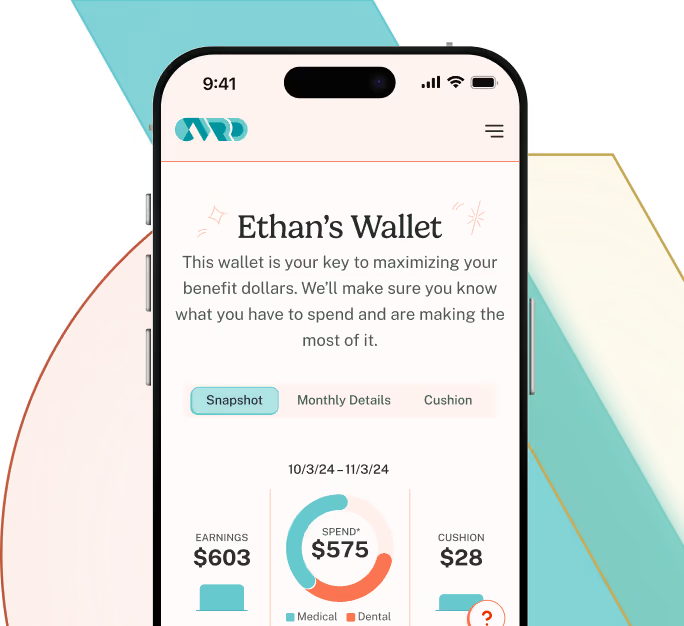
CVRD's platform gives contractors something they've never had: real-time visibility into what they owe, what they've spent, and what's still sitting on the table waiting to be recovered. No guesswork. No month-end surprises. No money left behind.
That financial clarity is paired with full benefits administration and in some cases an ICHRA (Individual Coverage Health Reimbursement Arrangement), an insurance model that gives each employee tax-free dollars to choose coverage that fits their life instead of forcing everyone into the same plan. Think of it like handing someone a gift card instead of picking out their outfit for them.
And because navigating health insurance shouldn't require a law degree, every employee gets a dedicated member advocate. A real person who helps them pick a plan, use it, and understand what they're signing up for.
Then there's the part nobody else is building for: audits aren't a risk in this industry. They're a when, not an if. DOL audits are rising, and federal contractors are a standing target. CVRD is built so that when the audit comes, every dollar, every hour, every plan election is already documented, reconciled, and ready to defend.
Contractors can recover 100% of their benefits spend. They stay compliant with SCA, DBRA, and prevailing wage requirements. And their employees finally get real choices in healthcare, often for the first time in their careers.
The Proof
CVRD already works with federal contractors nationwide. Aptive Resources saved over half a million dollars in its first year after switching, a 52% reduction in average premiums and a 30% drop in monthly employer contributions. Their employees gained access to plans optimized for their location and family situation. Not a one-size-fits-all compromise. Actual choices.
$5M to Scale It
Today, CVRD Health announced $5 million in seed funding led by Upfront and joined by Waterline Ventures and Distributed Ventures. The investment will accelerate platform development, expand the compliance and member advocacy teams, and bring CVRD to federal contractors of all sizes nationwide.
Health benefits are just the beginning. CVRD is building toward 401(k) administration purpose-built for prevailing wage contractors. A compliant captive insurance option will give contractors more control over their health plan costs and performance. Conformance support will help contractors navigate wage and benefit adjustments as contracts evolve. And AI-powered tooling across the platform will automate more of the compliance and enrollment work that currently buries small teams.
These are taxpayer dollars. They should go to the people earning them.
If you're a government contractor, a broker, or anyone in this space, contact us to learn more.
Educate & Engage